Why Your Tyre Pressure Warning Light Is On

why your tyre pressure warning light is on

A practical guide to tpms for UK drivers, from the CarPal mobile tyre team.

What the TPMS light actually means

TPMS stands for Tyre Pressure Monitoring System. It has been mandatory on new cars sold in the EU and UK since November 2014, so almost any car under about ten years old has it.

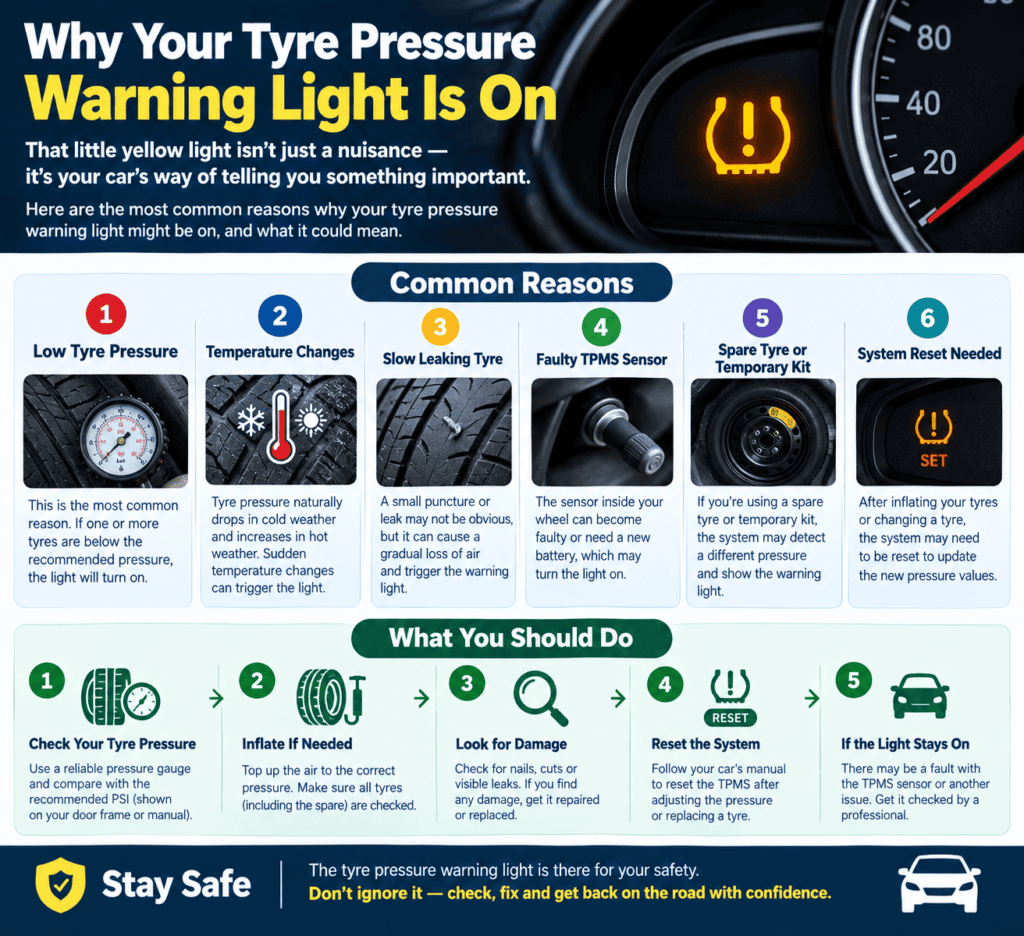
When the light comes on steadily, the system has detected that at least one tyre is below its target pressure — usually around 25% under. It does not tell you which tyre, and on most cars it does not tell you by how much.

A light that flashes for 60–90 seconds on startup and then stays on is different. That is the system reporting a fault with itself — a failed sensor, a flat sensor battery, or a sensor that has not been paired after a tyre change.

What to check first

Check all four tyres with a gauge, cold, against the figures on your door sticker. Do not trust the light to tell you which one is low — check them all.

Also check the spare if your car has a sensor in it, which some do.

If one tyre is low, inflate it and reset the system. If it goes low again within days, you have a slow puncture or a leaking valve, not a sensor problem.

Direct vs indirect TPMS

Direct TPMS uses a physical sensor inside each wheel that measures actual pressure and transmits it. These have batteries that last roughly 5–10 years and are not replaceable — when the battery dies, the sensor is replaced.

Indirect TPMS has no sensors at all. It uses the ABS wheel speed sensors to spot a tyre rotating slightly faster than the others, which indicates a smaller rolling diameter and therefore lower pressure. It is cheaper but less precise, and it always needs resetting after you adjust pressures.

Either way, after inflating, you will usually need to reset the system — normally a button in the glovebox or a menu option, then a short drive.

When it is a sensor, not a pressure problem

If your pressures are all correct and the light stays on, the likely causes are a failed sensor, a dead sensor battery, or a sensor that was not re-paired after new tyres were fitted.

This is common after tyre work at a garage that does not have the right diagnostic kit. The sensors need to be read and registered to the car. CarPal technicians carry TPMS tools and can diagnose this at your location.

Frequently asked questions

Can I drive with the TPMS light on?

You can, but do not ignore it. Check all four pressures as soon as you safely can. A steady light usually means a genuinely under-inflated tyre.

Why is my TPMS light on when my tyres are fine?

Most likely a failed sensor, a flat sensor battery, or sensors that were not re-paired after a tyre change. It can also be a cold morning dropping pressures below the threshold.

How do I reset the TPMS light?

On most cars there is a reset button, often in the glovebox or below the steering wheel, or a menu option in the driver display. Inflate to the correct pressures first, then reset, then drive for a few minutes.

How long do TPMS sensor batteries last?

Typically 5 to 10 years. They are sealed units, so when the battery fails the whole sensor is replaced.

Need help with your tyres?

📞 Call 07888 861557 · 💬 WhatsApp 07459 623445

Flat tyre, blowout or a tyre that keeps losing pressure? CarPal comes to you — at home, at work or the roadside — anywhere in the UK, 24 hours a day.

Related Tyre Services: Mobile Tyre Fitting,Puncture Repair, Area we cover

Scroll to Top